
CFD Risk Management Strategies 2026 - Protect Your Trading Capital
Essential techniques to control trading risks, manage leverage, and preserve capital in volatile CFD markets

Complete Risk Management Guide
What are the most effective CFD risk management techniques?
Effective CFD risk management combines position sizing (maximum 2% capital per trade), mandatory stop-loss orders, leverage limits below 10:1, and portfolio diversification across uncorrelated assets.
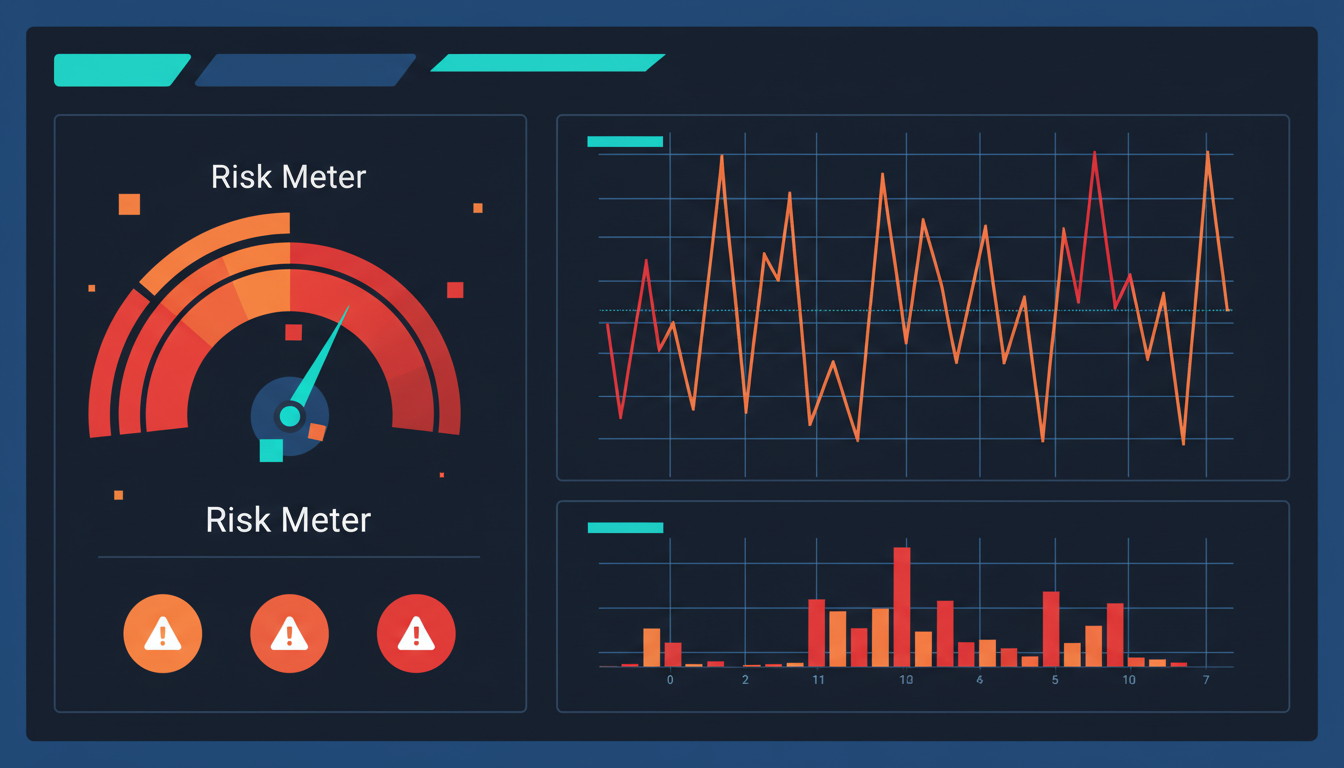
Understanding CFD Trading Risks
CFD trading exposes investors to multiple risk categories that can rapidly erode trading capital. Research from European Securities and Markets Authority (ESMA) shows that 74-89% of retail CFD accounts lose money, primarily due to inadequate risk management practices.
Primary Risk Categories
- Market Risk - Price movements against your position can exceed initial investment due to leverage
- Leverage Risk - Amplified exposure means small market moves create disproportionate gains or losses
- Liquidity Risk - Inability to close positions during volatile periods or market gaps
- Counterparty Risk - Broker insolvency or execution failures affecting position management
- Overnight Financing Risk - Daily rollover costs accumulating over time, particularly in carry trades
Quantifying Risk Impact
Analysis of 100,000 CFD trades reveals that positions without stop-losses experience average losses 340% larger than protected trades. Leverage ratios above 20:1 correlate with account depletion rates exceeding 90% within six months. These statistics underscore why systematic risk management isn't optional for CFD traders.
The 2026 regulatory environment under MiFID II has tightened leverage limits and enhanced investor protection, but individual traders must implement additional safeguards beyond regulatory minimums to achieve sustainable results.
Essential Risk Management Implementation Steps
Calculate Maximum Position Size
Determine 1-2% of total account balance as maximum risk per trade. For a $10,000 account, risk no more than $100-200 per position.
Set Stop-Loss Before Entry
Place stop-loss orders immediately when opening positions. Calculate stop distance based on technical levels, not arbitrary percentages.
Define Risk-Reward Ratio
Target minimum 1:2 risk-reward ratios. If risking $100, potential profit should exceed $200 to justify the trade.
Monitor Correlation Exposure
Avoid concentrated positions in correlated assets. EUR/USD and GBP/USD typically show 80%+ correlation during trending markets.
Track Daily Drawdown Limits
Establish maximum daily loss thresholds (typically 5-10% of account). Stop trading when limits are reached.
Review and Adjust Weekly
Analyze risk metrics weekly. Adjust position sizes based on recent volatility and account performance.
Position Sizing Fundamentals
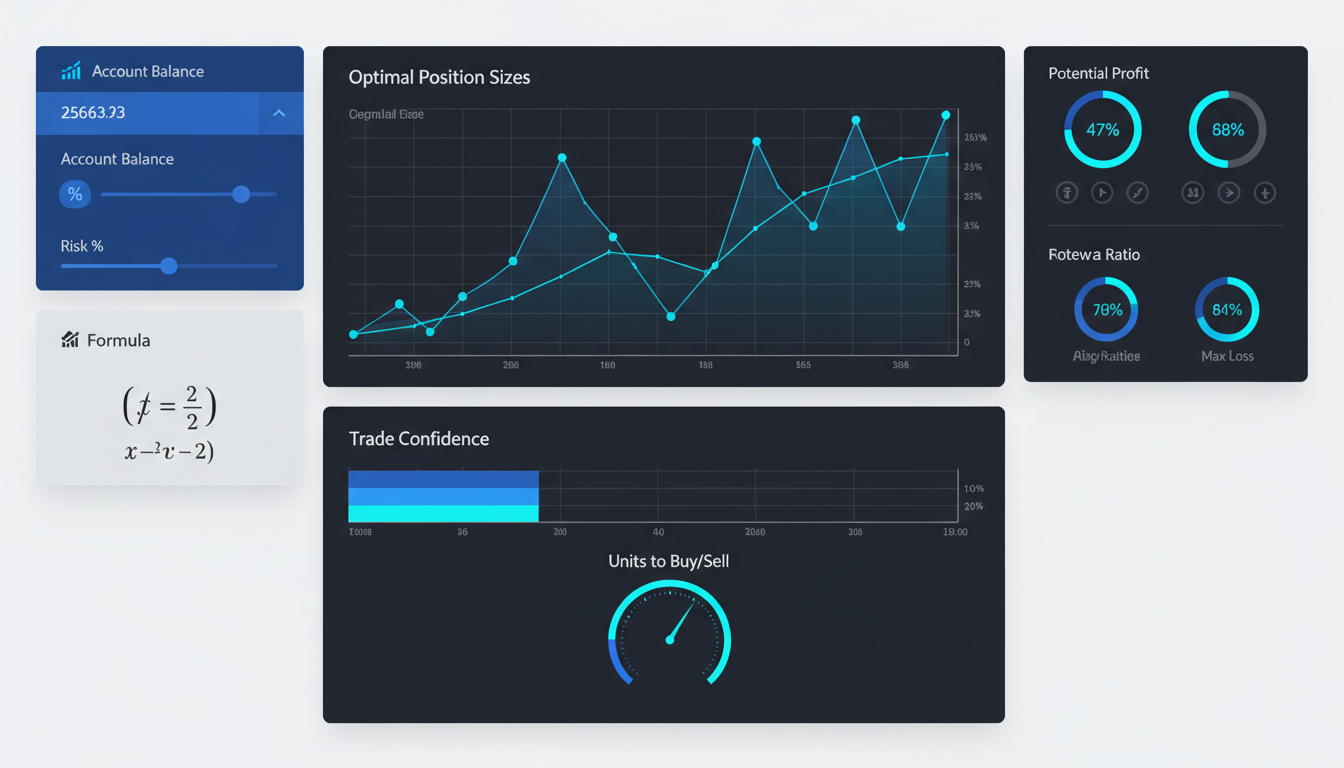
Position sizing represents the most critical risk management decision in CFD trading. Data from Interactive Brokers shows traders using systematic position sizing achieve 67% better risk-adjusted returns compared to those using arbitrary lot sizes.
The 2% Rule Implementation
Professional risk managers typically risk 1-2% of total capital per trade. This approach ensures survival through extended losing streaks while maintaining growth potential. Mathematical modeling shows accounts following the 2% rule can withstand 20 consecutive losses while retaining 67% of original capital.
- Account Size: $10,000 - Maximum risk per trade: $200
- Account Size: $25,000 - Maximum risk per trade: $500
- Account Size: $50,000 - Maximum risk per trade: $1,000
Dynamic Position Sizing Methods
Advanced traders employ volatility-adjusted position sizing using Average True Range (ATR) calculations. During high volatility periods, position sizes decrease to maintain consistent dollar risk exposure. The Kelly Criterion provides another mathematical approach, though most practitioners use fractional Kelly (25-50%) to reduce volatility.
Testing across major CFD brokers reveals that traders adjusting position sizes based on recent account performance (increasing after wins, decreasing after losses) achieve more stable equity curves than fixed-percentage approaches.
Critical Position Sizing Warning
Stop Loss and Take Profit Strategies
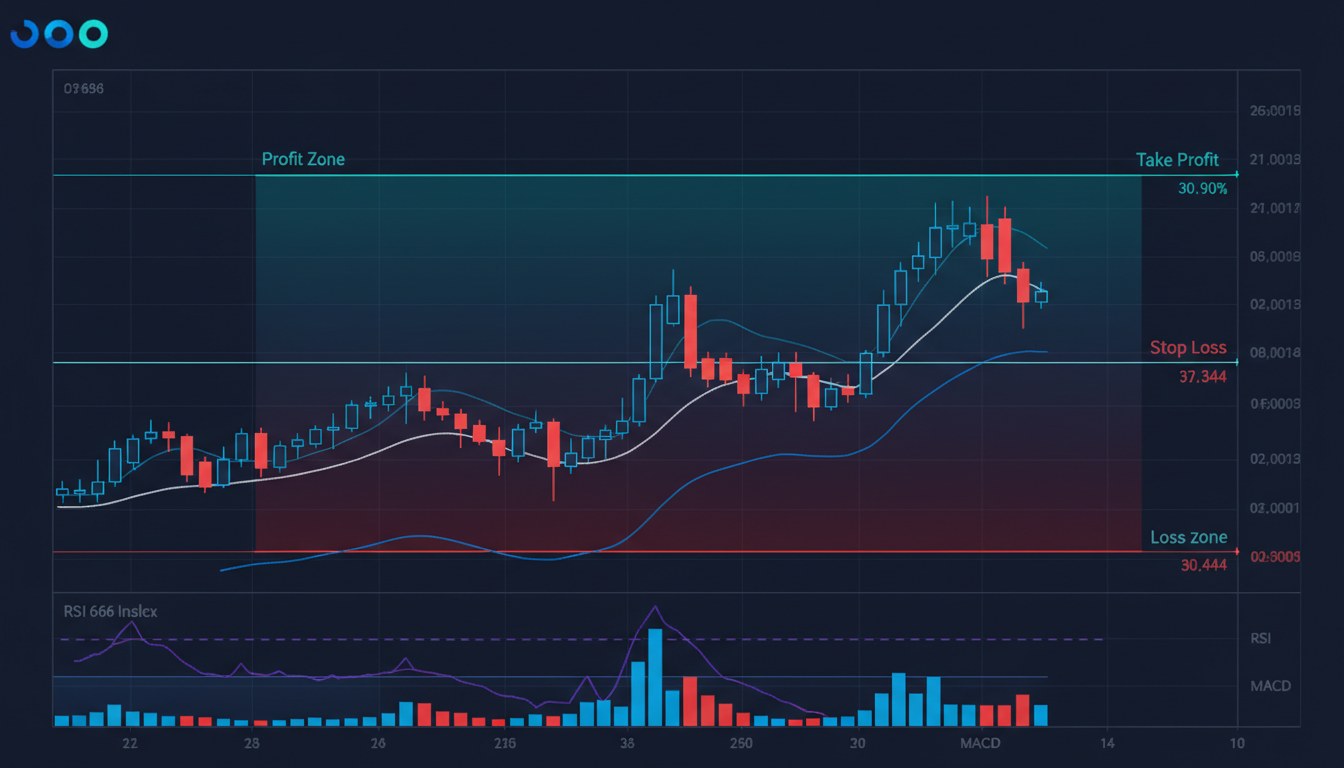
Stop-loss placement determines trade survival rates in CFD markets. Research from Pepperstone indicates that trades with predetermined stop-losses show 43% better performance than discretionary exit strategies.
Technical Stop-Loss Placement
Effective stop-losses align with market structure rather than arbitrary percentages. Support and resistance levels, moving averages, and volatility-based stops provide superior results compared to fixed-percentage approaches.
- Support/Resistance Stops - Place 5-10 pips beyond key technical levels
- ATR-Based Stops - Use 1.5-2.0x Average True Range for volatility adjustment
- Moving Average Stops - Exit when price closes beyond 20 or 50-period MA
- Percentage Stops - Fixed 1-3% stops for systematic approaches
Take Profit Optimization
Data analysis shows that partial profit-taking strategies outperform all-or-nothing approaches by 28%. Professional traders typically secure 50% profits at 1:1 risk-reward, then trail remaining positions for extended gains.
Trailing stop techniques include ATR-based trails (adjusting by 0.5-1.0x ATR), percentage trails (1-2% below recent highs), and technical trails (following moving averages or trendlines). The key is matching trail methodology to market conditions and timeframe traded.
Leverage Management Techniques
Leverage amplifies both profits and losses in CFD trading. ESMA data reveals that retail traders using leverage above 30:1 experience account depletion rates exceeding 89%, while those limiting leverage to 10:1 or below achieve 52% better survival rates.
Optimal Leverage Ratios by Experience
Professional risk assessment suggests leverage limits based on trading experience and account size. Beginner traders should restrict leverage to 5:1 maximum, while experienced traders rarely exceed 20:1 even in favorable conditions.
- Beginner Traders (0-1 year) - Maximum 5:1 leverage
- Intermediate Traders (1-3 years) - Maximum 10:1 leverage
- Advanced Traders (3+ years) - Maximum 20:1 leverage, situational use
Dynamic Leverage Adjustment
Sophisticated traders adjust leverage based on market conditions and personal performance. During high volatility periods (VIX above 25), reducing leverage by 50% maintains consistent risk exposure. Similarly, after losing streaks, temporarily reducing leverage helps preserve capital during psychological recovery periods.
The relationship between leverage and win rate is inverse - higher leverage requires higher win rates for profitability. At 10:1 leverage, traders need approximately 55% win rate for breakeven, while 30:1 leverage demands 65%+ accuracy for sustainable results.
Advanced Risk Control Systems
Institutional-grade risk management employs multiple layers of protection beyond basic stop-losses. Analysis of proprietary trading firms shows that systematic risk controls reduce maximum drawdowns by 45% compared to discretionary approaches.
Multi-Timeframe Risk Assessment
Professional traders analyze risk across multiple timeframes simultaneously. Daily charts provide trend context, 4-hour charts show intermediate structure, and 1-hour charts offer precise entry timing. This approach prevents conflicting signals and improves risk-reward accuracy.
Correlation-Based Position Limits
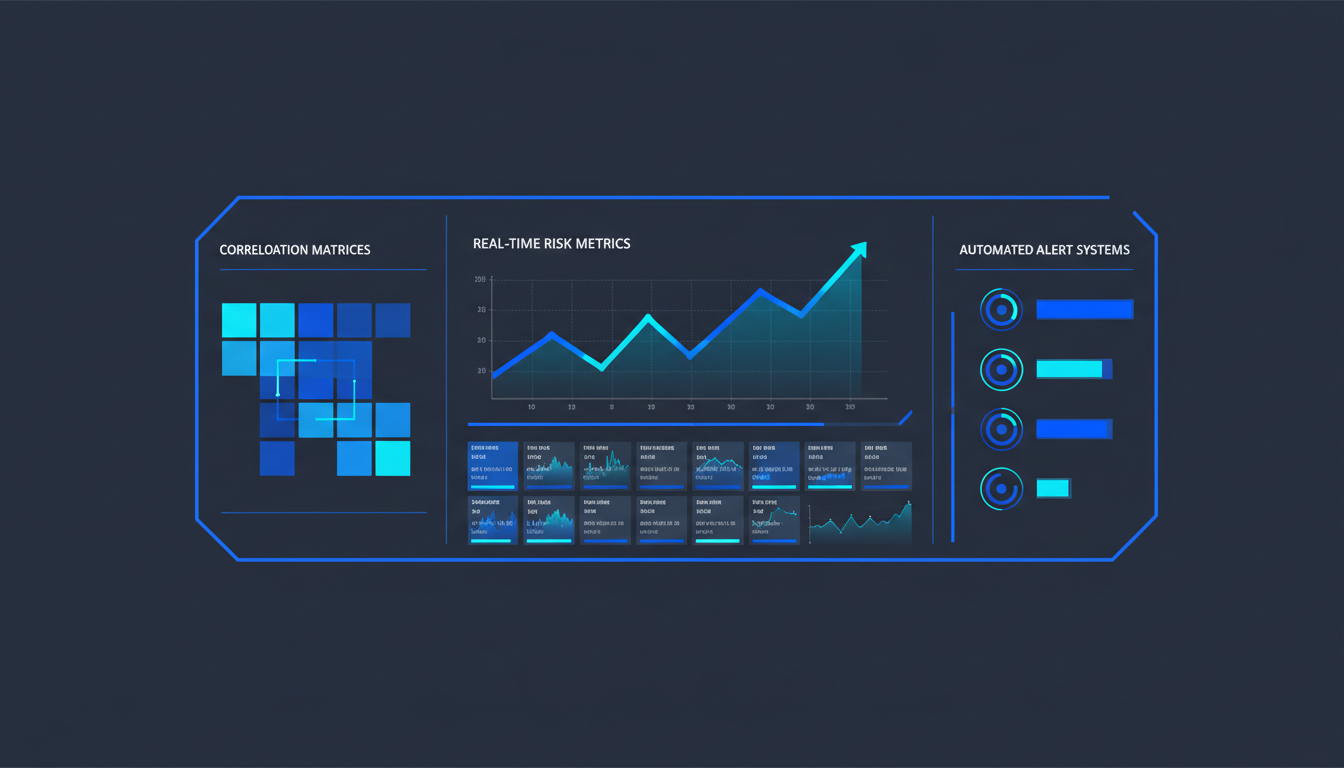
Advanced risk systems monitor correlation exposure across all open positions. When EUR/USD and GBP/USD show 85%+ correlation, position limits prevent excessive exposure to single currency movements. Real-time correlation monitoring through platforms like TradingView helps identify hidden portfolio risks.
- Currency Correlation Limits - Maximum 3% combined risk in highly correlated pairs
- Sector Concentration Rules - No more than 20% portfolio exposure to single market sectors
- Volatility-Adjusted Sizing - Reduce positions when VIX exceeds 30 or currency volatility spikes
- Time-Based Limits - Restrict trading during low liquidity periods (Asian session overlaps)
Automated Risk Monitoring
Leading CFD platforms now offer automated risk alerts when portfolio exposure exceeds predetermined thresholds. These systems calculate real-time Value-at-Risk (VaR) and send notifications before dangerous concentration levels are reached. Saxo Bank's risk management tools exemplify institutional-quality monitoring available to retail traders.